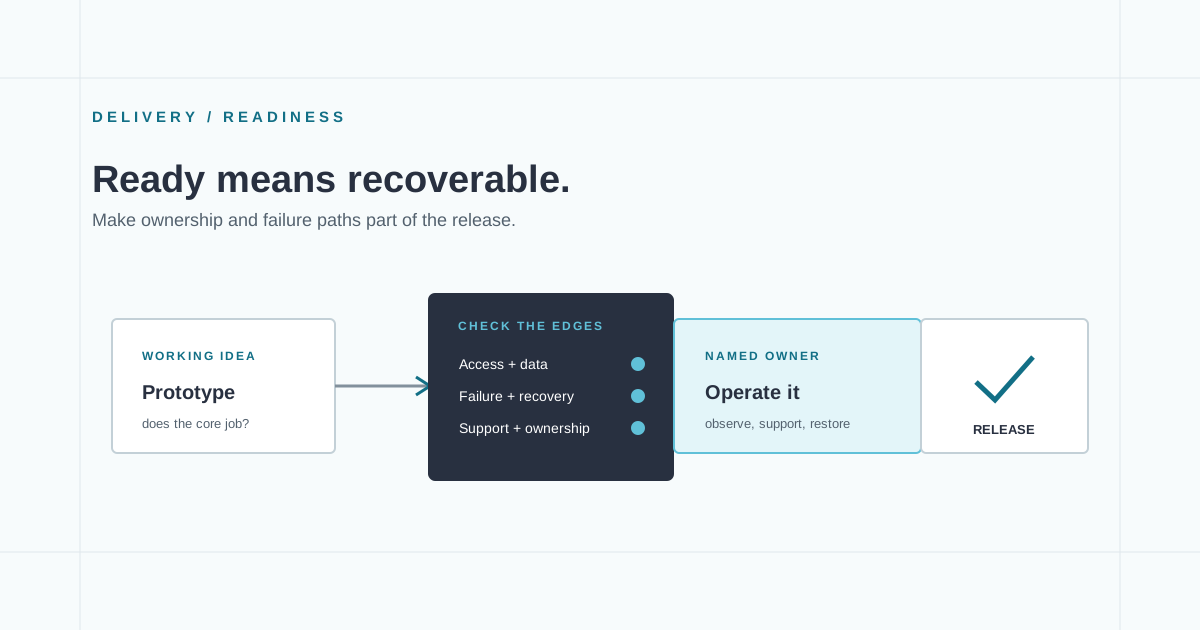
A prototype answers a narrow question: can this idea work? Production software has to answer a wider one: can the intended people use it safely, recover when something fails, and understand who maintains it?
The transition is not a single deployment step. It is a set of decisions about users, data, operations, and failure. A prototype can be a valuable starting point, but the assumptions that made it fast may not be suitable once real work depends on it.
Confirm the product path
Identify the first user group and the task the release supports. Walk that path from sign-in or entry through completion. Check that the user can tell what happened, what remains to do, and where to go when information is missing. Test keyboard access and narrow-screen layouts alongside the happy path.
Write down what is intentionally outside the release. A limited scope is manageable when the boundary is visible. It becomes risky when a demo quietly turns into the system people rely on without anyone agreeing who handles its gaps.
Review identity and data
Before real records enter the application, answer these questions:
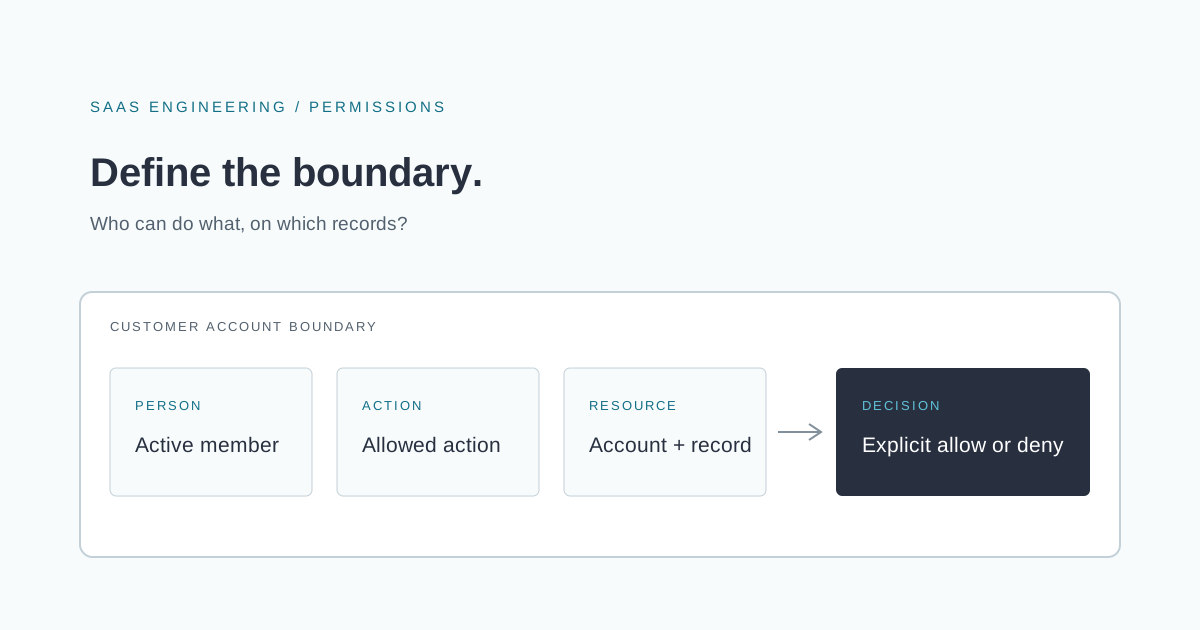
- Which roles can see, create, change, export, or delete each kind of data?
- Does the application validate data at its boundaries?
- Where are credentials stored, and which systems can access them?
- What information is logged, and could those logs expose something private?
- How are backups, retention, correction, and deletion handled?
Use least-privilege access and avoid collecting fields the product does not need. If an AI provider or another service receives data, include that flow in the review and make it understandable to the people who own the information.
Make failures legible
List what can fail: a slow dependency, a duplicate submission, an expired session, a rejected payment, a bad import, or an interrupted background task. For each one, decide what the user sees, whether retrying is safe, how the team detects the failure, and who can resolve it.
Retries deserve particular care. The HTTP standard distinguishes idempotent methods because repeating an identical request can have the same intended effect as sending it once; a non-idempotent operation may need an idempotency key or an explicit status check before retrying. See RFC 9110, section 9.2.2. The same principle applies to buttons and background jobs: make duplicate actions safe or make their state clear.
Decide how the release will be operated
Choose an owner for production changes and incidents. Define how the application is deployed, how a bad release can be rolled back, which signals matter, and how support requests reach the person who can act. Confirm the expected cost and dependency limits before exposing a feature to more users.
Monitoring should answer an operational question: can the team tell whether the core path is working and where it is failing? Start with a small set of useful signals and add detail when experience points to a gap. Do not collect sensitive payloads merely because they make debugging convenient.
Run a readiness walkthrough
Ask someone outside the implementation work to complete the core task, trigger one expected error, and explain what they would do next. Then ask the maintainer to find the relevant logs, identify the current version, and describe how they would recover from a bad change.
If either person has to guess, there is a concrete next task. Production readiness is not a stamp of perfection; it is a shared understanding of the release boundary, failure paths, and ownership. For a new product or a prototype ready to grow, we can help turn the working idea into a dependable first release.