A Business Dashboard Should Tell You What Needs Attention
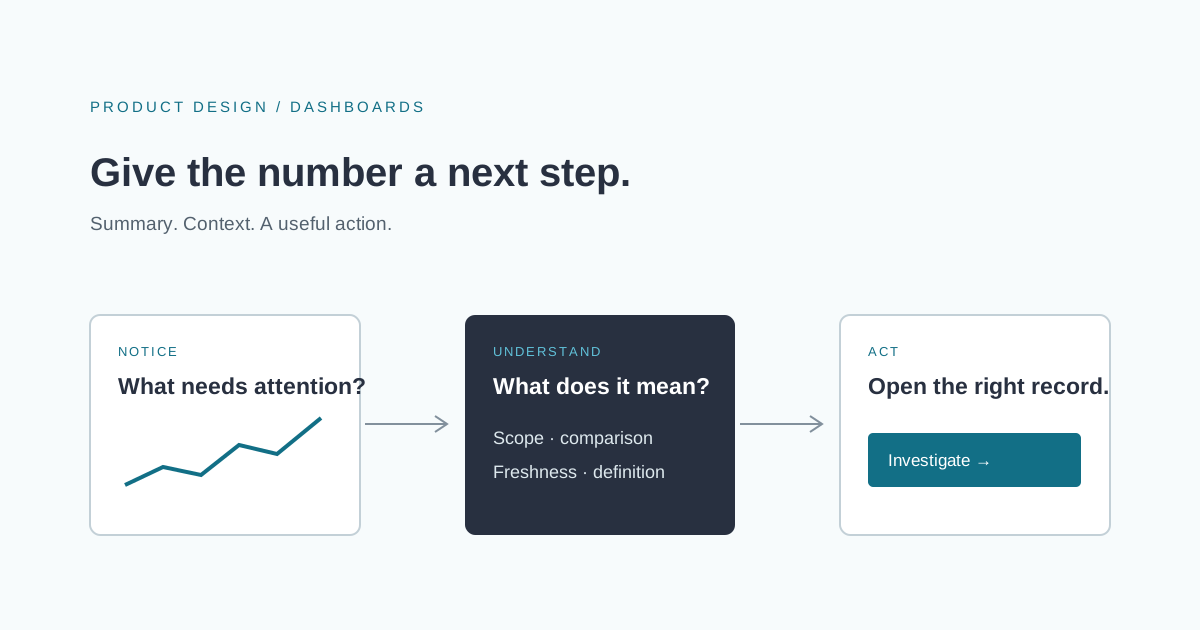
How to design a business dashboard around decisions, meaningful comparisons, trustworthy data, and a clear route from a metric to the work behind it.
By Esraa Kamel · 4 min readRead

Co-founder
Esraa Kamel is a co-founder of Codefront Labs, a Python backend engineer, and an agentic AI engineer based in Egypt. Her experience at Sercodev Solutions spans backend software engineering, full-stack AI development, and senior agentic AI engineering. She builds asynchronous FastAPI services, typed Pydantic contracts, PostgreSQL data models, and Docker deployments, connecting AI workflows to the services and data they depend on.
Esraa led the team's first production LangGraph multi-agent rollout and built its first production Pinecone retrieval-augmented generation system. Her work combines typed tool calls, explicit state transitions, durable checkpoints, and human approval steps so workflows can recover after interruption. She has also established CI evaluation gates calibrated against human labels, traced model runs with MLflow and LangSmith, and mentored four engineers.
Her project experience includes a manufacturing automation SDK and MCP server, a browser agent for payer enrollment, merchant analytics APIs and ingestion pipelines, and resumable CI agents for code review and migrations. These systems use bounded actions, persisted state, audit records, and contract testing to make automated work easier to inspect. She holds a BSc in Computer Science from Menoufia University and is pursuing an MSc in Artificial Intelligence at Woolf University.
AREAS OF FOCUSHow to design a business dashboard around decisions, meaningful comparisons, trustworthy data, and a clear route from a metric to the work behind it.
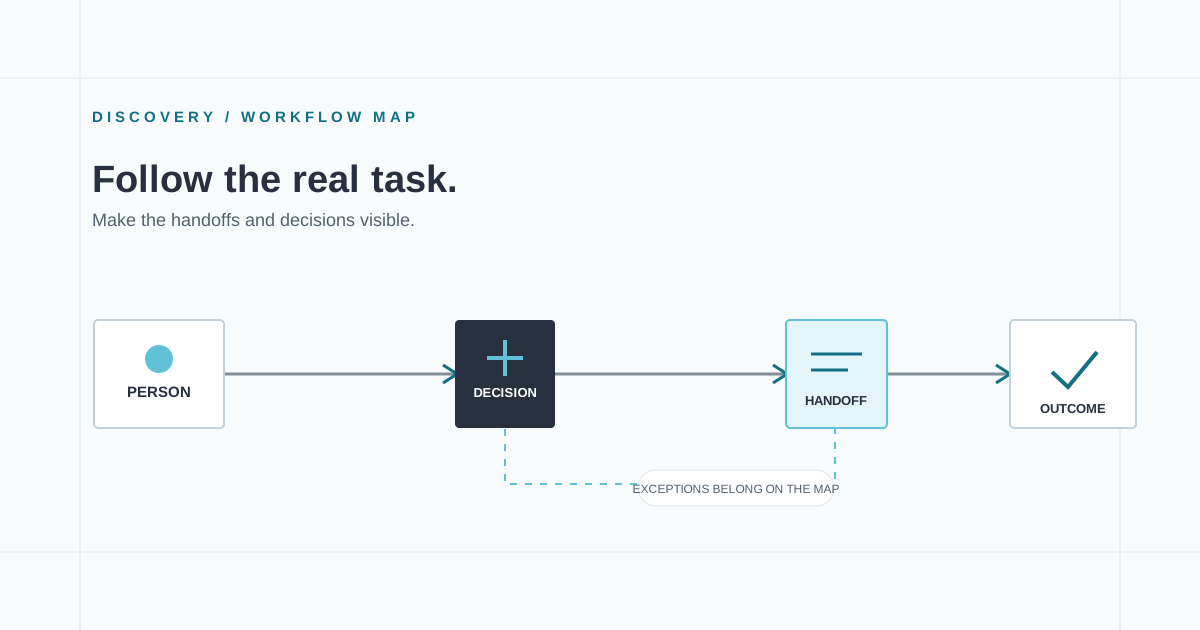
A practical discovery guide for teams weighing custom software: trace the real task, its handoffs, decisions, exceptions, and evidence before writing a feature list.
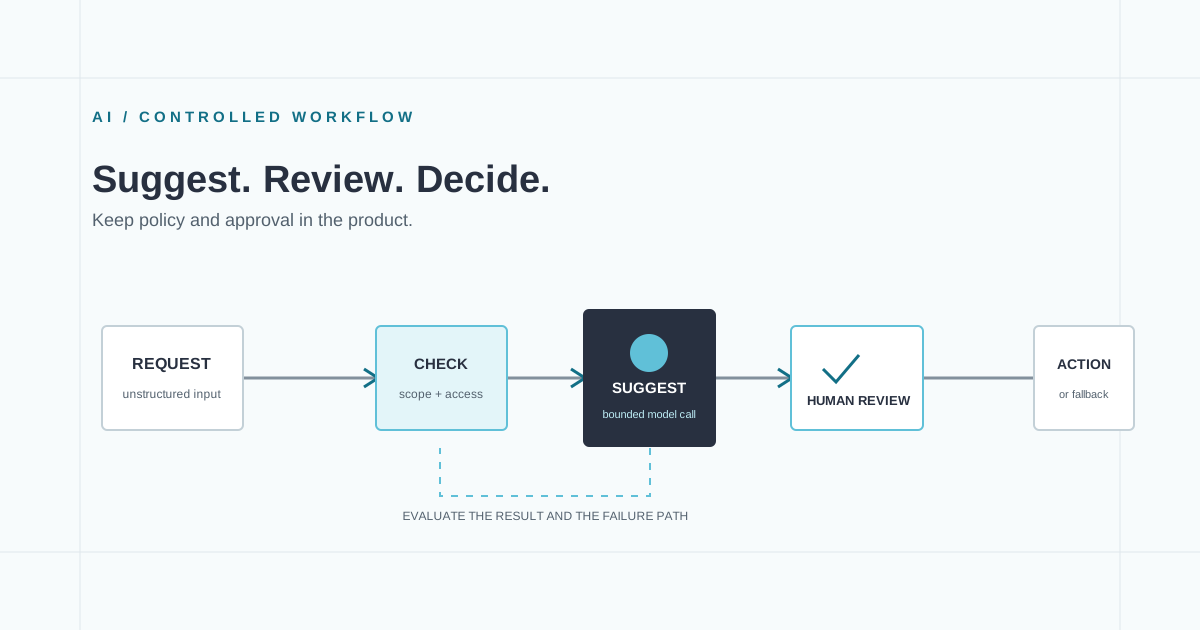
A decision guide for adding AI to business workflows: identify judgment-heavy tasks, keep deterministic rules where they fit, and design review and recovery before launch.
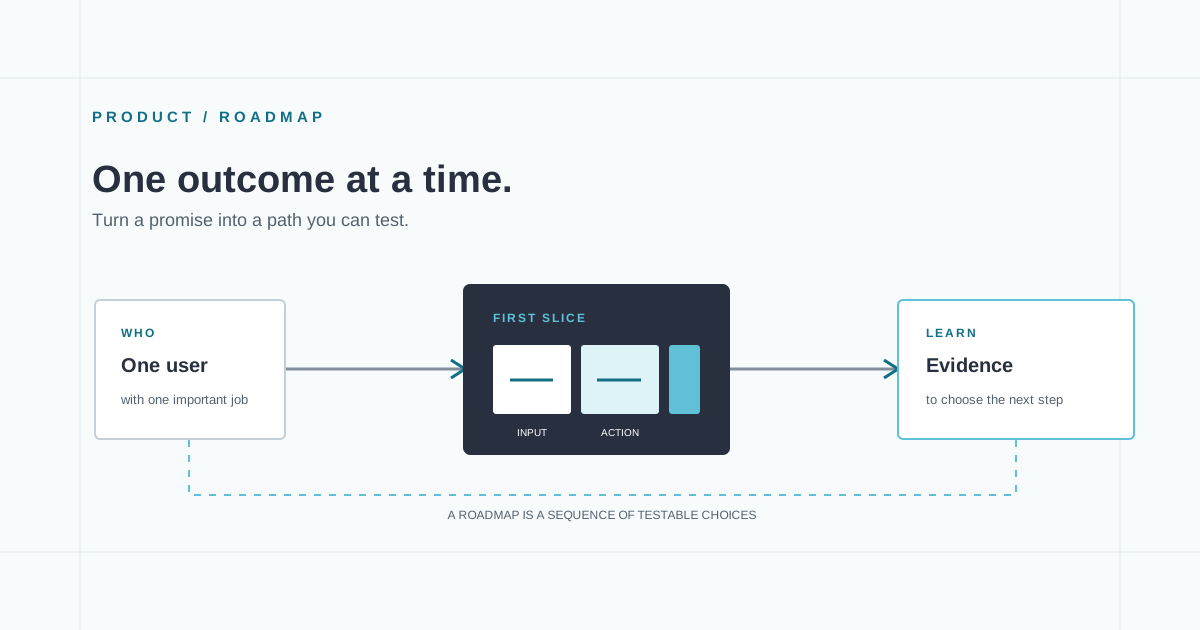
Replace feature-first SaaS planning with a clear user outcome, a narrow end-to-end slice, and evidence that tells you what to build next.