A closer look at Truss.
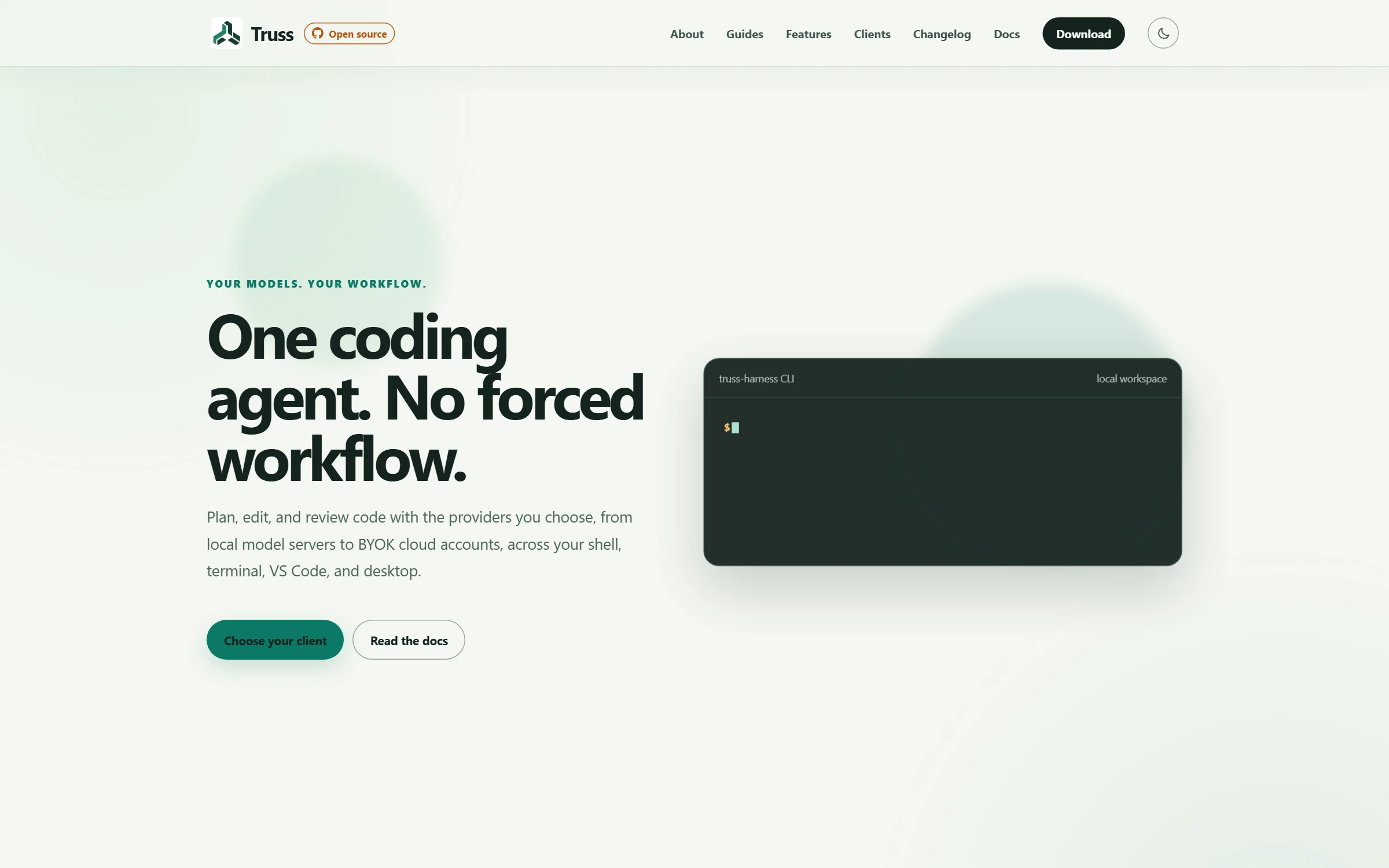
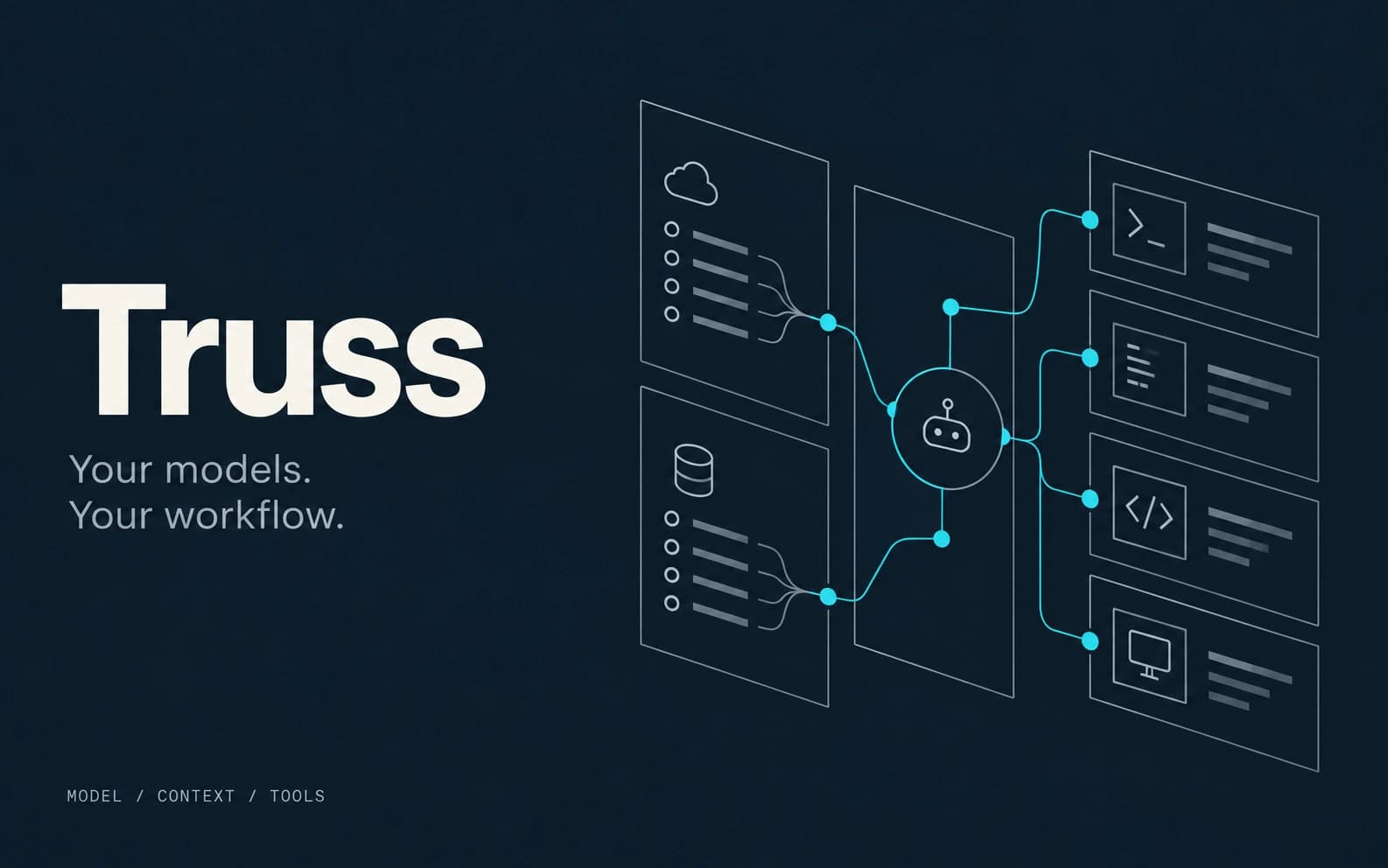
Truss lets developers choose their interface and model without adopting a different agent for each workflow. Local model servers and supported cloud accounts connect to a shared runtime, while workspace context and permissions stay close to the work.
The challenge
An agent tied to one editor or provider makes a change of workflow expensive. Repeating configuration across separate clients also fragments context and approval settings. Truss addresses that coupling by making the runtime independent of the interface.
The product experience
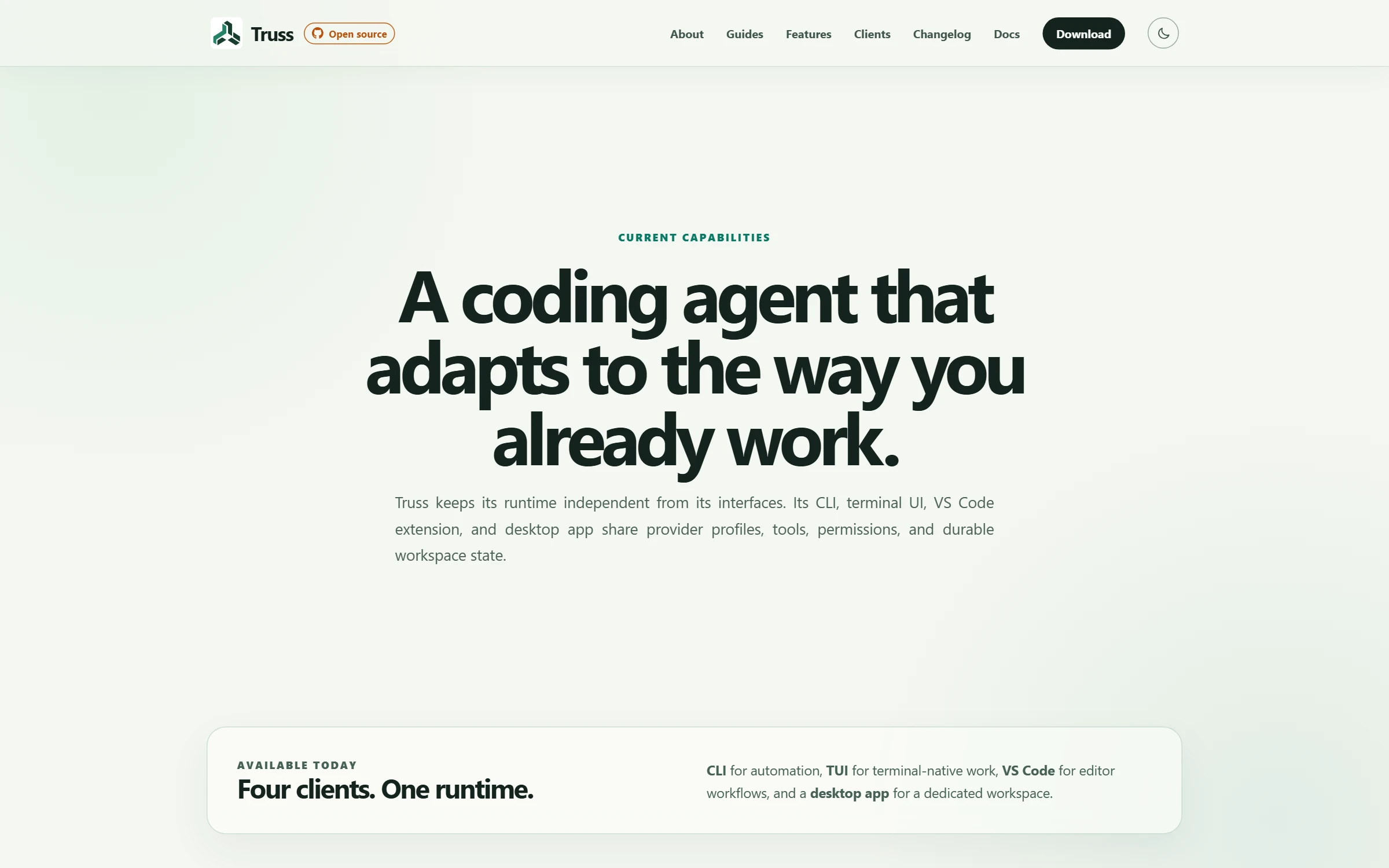
CLI commands support shell tasks and automation. A full-screen terminal workspace brings files, diffs, chat, and approvals together. VS Code and Electron desktop clients offer other ways to access the same agent foundation. Saved provider profiles support local servers and bring-your-own-key cloud configurations.
- Four client surfaces share one agent runtime.
- Provider profiles support local and supported cloud configurations.
- Persistent plans, conversations, and workspace memory support resumed work.
Product & engineering
A TypeScript-first, event-driven runtime separates providers, tools, context, memory, sessions, and client interfaces. The CLI also exposes a JSON-lines service for editor clients. Conversations and implementation plans use durable workspace state, while explicit Chat, Plan, and Edit modes govern the workflow. Streaming tool activity and interruption controls keep execution visible.
The decisions that shape the work
Separate the runtime from the interface
Let client surfaces evolve without rebuilding the agent foundation.
Keep provider choice explicit
Use saved profiles for supported cloud accounts or local model endpoints.
Keep context and control visible
Present relevant workspace state, tool activity, diffs, and approval requests where developers work.
Working within the constraints
- Provider support depends on the configured local endpoint or supported cloud account; not every model is interchangeable.
- Tool permissions and approval policies must remain explicit across client interfaces.
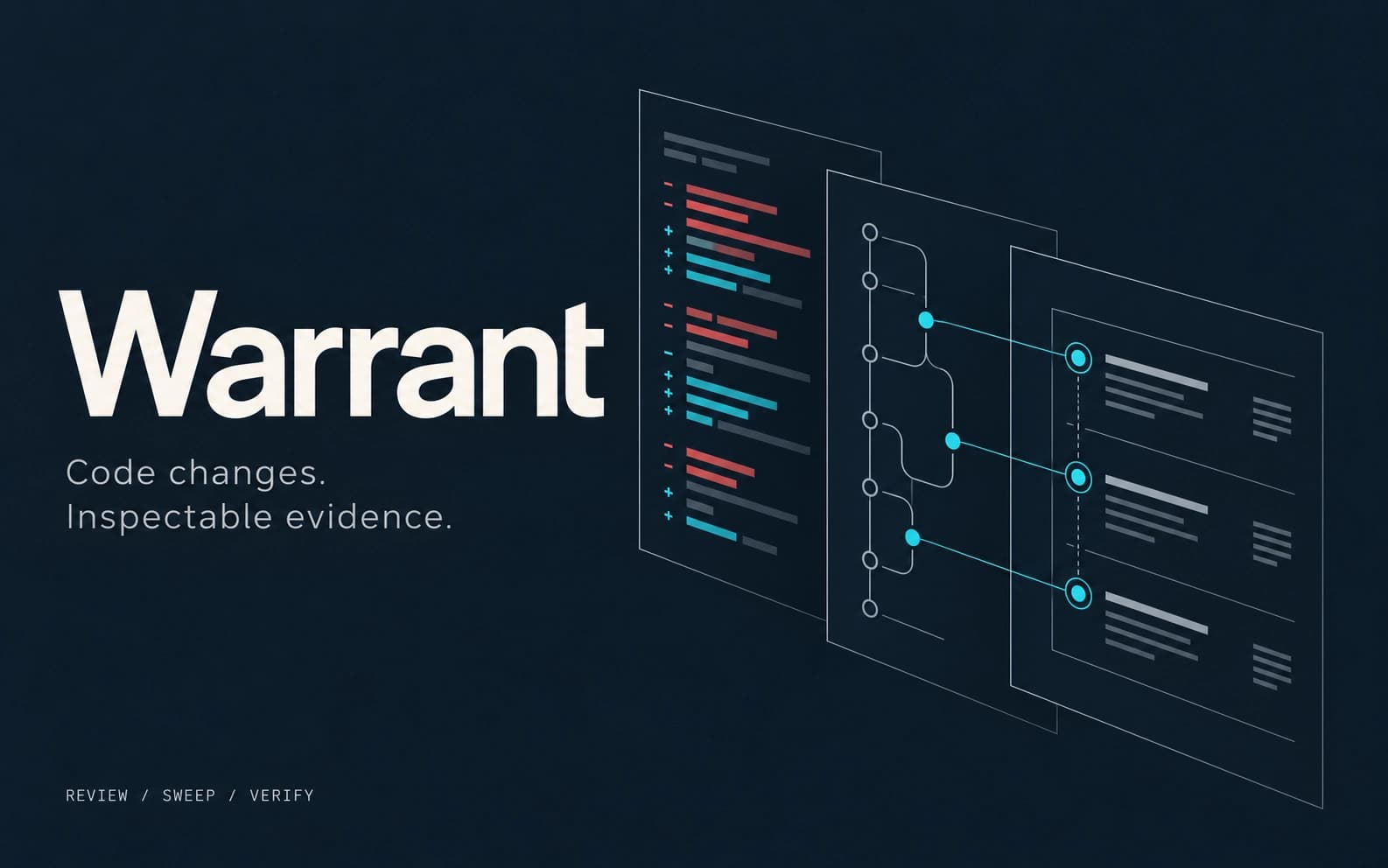
- Public website illustrations describe the product; they are not evidence of a measured delivery or accuracy result.
Have a similar challenge?
Truss demonstrates the engineering behind a developer tool that spans multiple interfaces. The same separation of runtime, integrations, and user controls can help teams build maintainable agent-enabled products.
Talk about your project