A closer look at ForgeLoop.
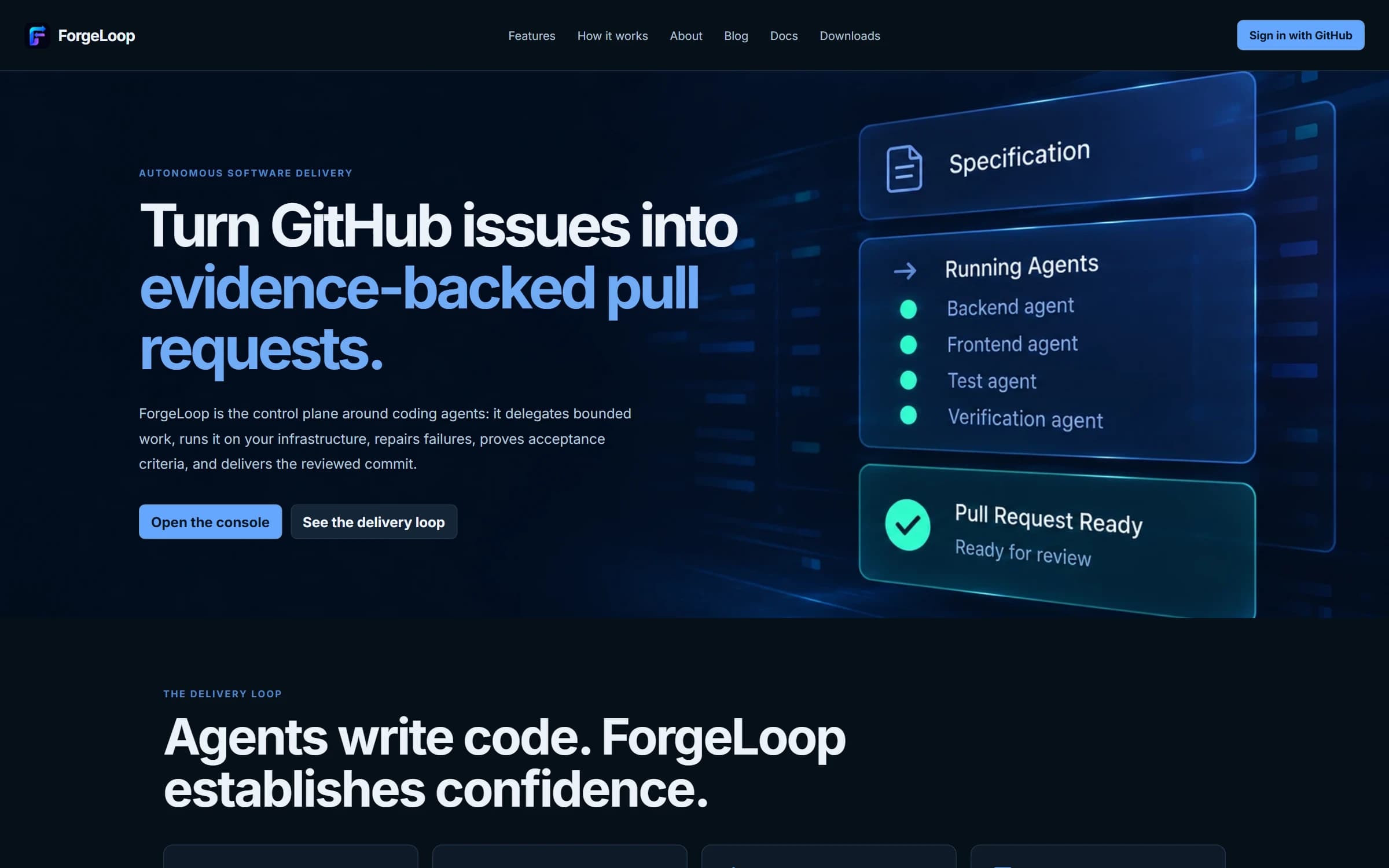
ForgeLoop addresses the work around a coding agent: deciding what it may do, coordinating dependent tasks, checking the change, recovering from failures, and delivering the commit that was reviewed. Its web console and enrolled runners keep repository execution close to the infrastructure the developer controls.
The challenge
Writing code is one stage of software delivery. An automated change still needs a clear scope, a working branch, appropriate checks, and a deliberate review point. When several agents or machines participate, the system also needs to track ownership, dependencies, failures, and the identity of the commit that passed verification.
The product experience
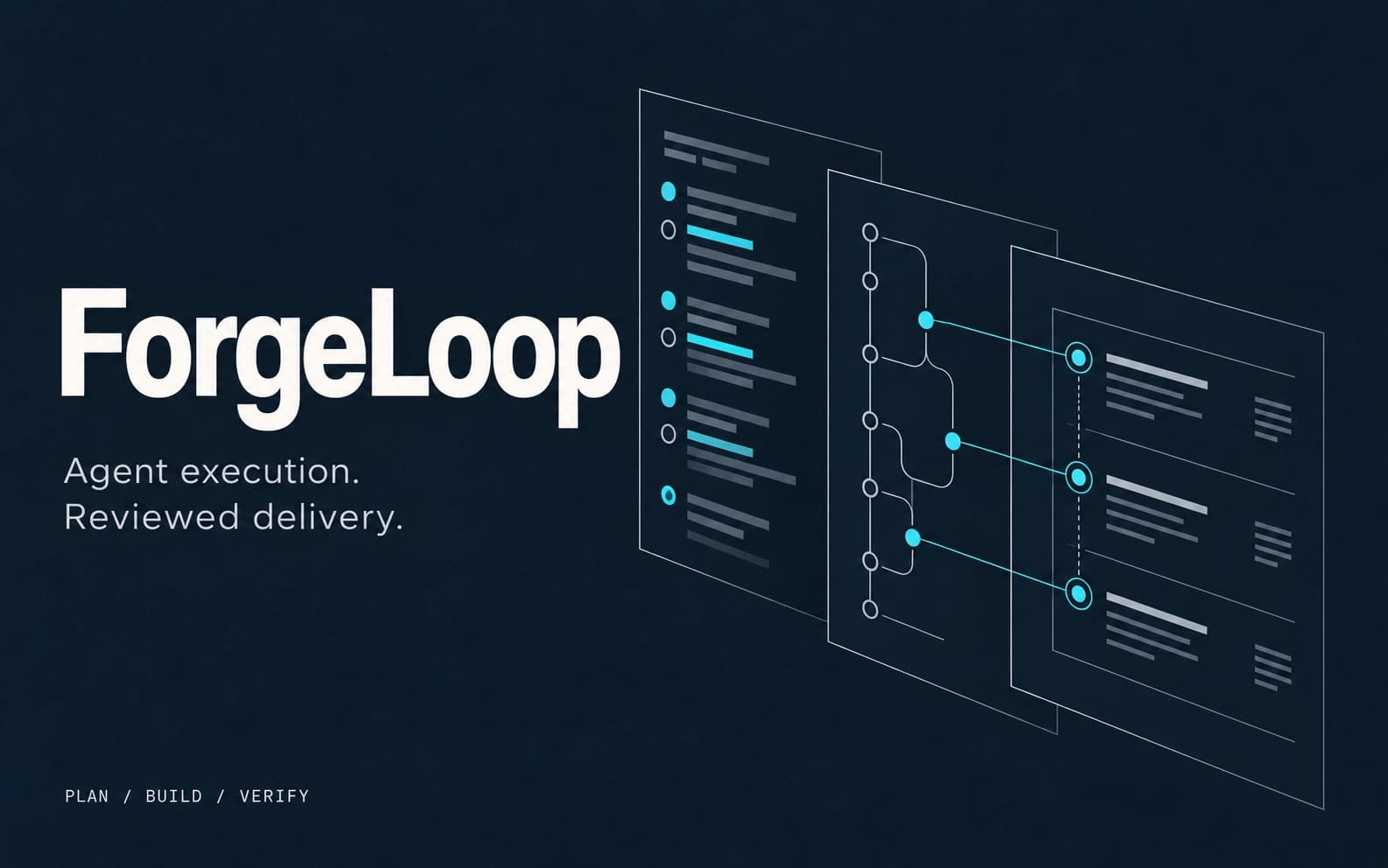
ForgeLoop turns eligible GitHub issues into a task graph with dependencies, acceptance criteria, and file ownership boundaries. Runners claim tasks through leases and execute them in isolated Git worktrees. Changes move through integration, configured verification gates, bounded repair attempts, and independent review before delivery returns a pull request to the original repository.
- A visible lifecycle around a GitHub issue, from intake through verification and a pull request.
- Repository-specific harnesses and runner-local tools adapt the process to an existing stack.
- Recorded checks and bounded repair attempts give reviewers context beyond a completion summary.
Product & engineering
A GitHub App supplies selected repository access while the web control plane coordinates runs, membership, policy, and evidence. Runner-local tools execute commands, containers, browser checks, and configured MCP processes. Gate outputs and checksummed artifacts support review of the exact commit. Worktrees separate checkout changes; they are not a security sandbox. Human approval remains part of delivery policy, with guarded auto-merge available when explicitly enabled.
The decisions that shape the work
Separate coordination and execution
Give the console responsibility for delivery state and the runner responsibility for repository commands.
Verify a specific change
Tie acceptance coverage, gate output, and delivery checks to the commit under review.
Bound recovery
Feed failed checks into limited repair attempts and surface the need for attention when limits are exhausted.
Working within the constraints
- Repository access and issue intake need explicit authorization before processing starts.
- Execution and provider credentials remain on enrolled infrastructure controlled by the user.
- A changed branch must not inherit verification evidence for an earlier commit.
Have a similar challenge?
For teams building agent-driven developer tools or operational automation, ForgeLoop illustrates the coordination, state, verification, and recovery systems needed around model execution.
Talk about your project